
September 2025
Sarnia Rock in Autumn: colors, tranquility, views
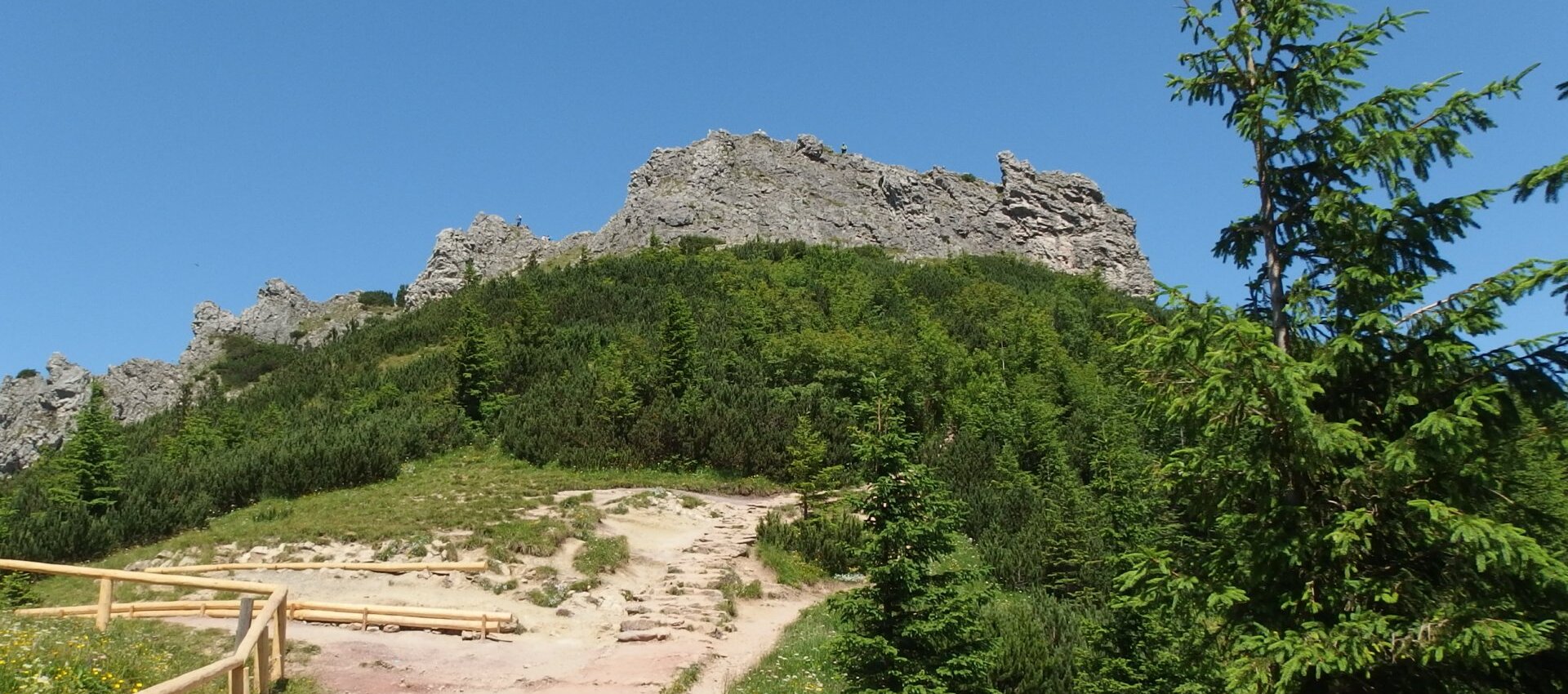
September in the Tatras is a time of silence and light. Summer slowly recedes, the valleys are filled with the scent of damp leaves, and the peaks are shrouded in soft mist. The days are still warm, but the air is cooler, clear, and rich in color. It is the perfect moment to return to Sarnia Skała – the same one that tempted with freshness in spring, and now shows a completely different face. In autumn, it becomes a place of reflection, golden panoramas, and silence, which is hard to find in the summer hustle and bustle.
Autumn in the Tatras – a light that paints
The Tatras in September look like a landscape from a painting. The reds of the rowans, the oranges of the beeches, the yellows of the larches, and the greens of the spruces create a nature’s palette of colors that is hard to describe in words.
The path to Sarnia Skała leads through the Strążyska Valley – the same one which in summer smells of resin and the laughter of tourists. Now it is calm, quiet, and its paths are strewn with leaves that rustle underfoot like a soft autumn melody.
Morning sun filters through the branches, and mist rises above the stream like a delicate veil. That is precisely when the Tatras are the most beautiful – not loud, not crowded, but focused.
A trail that soothes
The ascent to Sarnia Skała is a classic – moderate effort, a short route, and a spectacular effect.
From Strążyska Glade, the trail climbs toward the Red Pass, and then it is only a few minutes left to the summit. In autumn, it’s worth not rushing. Stop for a moment by the stream, sit on a log, listen to how the forest breathes.
This is not a time for records and haste. It is time to look around and feel how the Tatras are changing. Because at this time of year, the mountains don’t shout – they whisper.
A view that stays in memory
From the summit of Sarnia Skała (1377 m above sea level) there is a panorama that is unforgettable. Straight ahead – the majestic Giewont bathed in autumn light. Its outline – the Sleeping Knight – seems even more distinct in the warm hues of September.
Below – forests in a thousand shades of gold and red. And in the distance – Zakopane, shrouded in milky mist.
This place has something special about it. In autumn, when most tourists choose higher trails, here you can really find peace. One that needs no words.
Sarnia Skała – a point of peace and balance
Many return here precisely in autumn. Not for a photo, not for the summit – but for a moment of breath. For that balance between the warmth of the day and the coolness of the air, between silence and the rustle of the forest. The walk to Sarnia Skała lasts about 2–3 hours round trip. It is an ideal option for an autumn weekend – not too difficult, but satisfying. It’s worth bringing a thermos with tea, a warm sweater, and a camera. Because the light in September can surprise – it changes from minute to minute, as if the Tatras were painting themselves.
An autumn palette of emotions
Every step on this trail is a different experience:
- at the beginning – the scent of wet earth and moss,
- midway – sunlight filtering through the trees,
- at the summit – space and silence that stay with you for a long time.
It is in autumn that Sarnia Skała shows most fully what the Tatras are – not only mountains but a state of mind.
Why it’s worth coming right now
- September is the most picturesque month in the Tatras – colors, light, and peace create a unique atmosphere.
- Sarnia Skała is easily accessible, and the views rival those of much higher peaks.
- It is the perfect place for relaxation after an intense summer – still close to Zakopane but far from the noise.
- In autumn light, Giewont looks as if it is really sleeping – peaceful, dignified, above everything.
Peace for the soul
September in the Tatras is a time of farewells – to summer, to the sun, to the crowds. But it is also the time of the most beautiful moments for those who seek true connection with the mountains.
Sarnia Skała in autumn requires nothing but presence. Sit, look, breathe.
Because here, among golden leaves and the silence of the forest, it’s easiest to understand why the Tatras affect the heart so deeply.