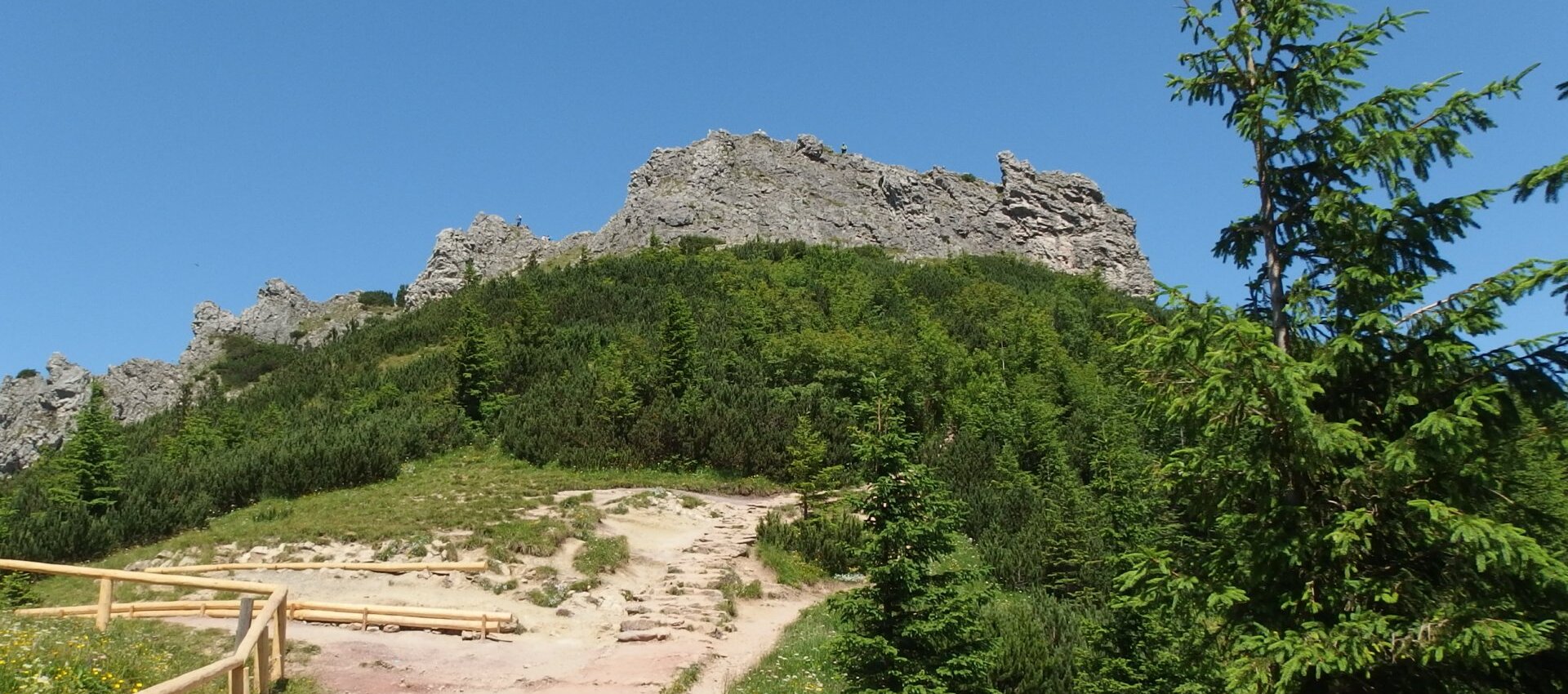
Towards the Sleeping Knight
Sarnia Skała (1377 m above sea level) is a rocky peak overlooking the Strążyska Valley. It is from here that Giewont, called the Sleeping Knight by the highlanders, is best seen. Its profile – head, torso, and sword – emerges from the landscape so clearly that it’s hard to look away. The trail starts in the Strążyska Valley and leads through the Strążyska Glade and the Red Pass. The route is short but scenic – at every turn, the perspective changes, and the spring sun shines through the branches of the trees like a crown of light.
Spring colors of the Tatras
In April, the Tatras begin to awaken. The first crocuses appear on the slopes, followed by anemones and pasqueflowers. Fresh buds glisten on the trees, and the scent of resin fills the air. The path to Sarnia Skała leads through parts of the forest where you can feel this change – after winter silence, everything suddenly starts to live. At the Strążyska Glade, where you can already see Giewont, you can sit on a bench, drink tea from a thermos, and just watch. The view in April has something soft about it – not yet the summer glow, but no longer the winter shade.
A panorama that takes your breath away
From the Red Pass to the summit of Sarnia Skała, there is a short, rocky ascent. Then suddenly the space opens up. Before you is Giewont – monumental, dignified, illuminated by the afternoon sun. Below is Zakopane, and beyond – the peaks of the Red Hills and Gubałówka. This is a place where you truly feel the Tatras. Without great heights, without effort – but with full contact with nature.
The perfect trail for a spring day
Sarnia Skała is a proposition for everyone – families, beginner hikers, and also for those who simply want to breathe after winter. The route takes about 2–3 hours round trip, and the reward is spectacular. Spring is a time when the Tatras are still calm, and the light – gentle. If you want to see Giewont from the best viewpoint, go here.
Sarnia Skała in April is a symbol of the Tatras’ awakening.